Calluses and heels · Chicago
Calluses, corns and cracked heels — Buffalo Grove
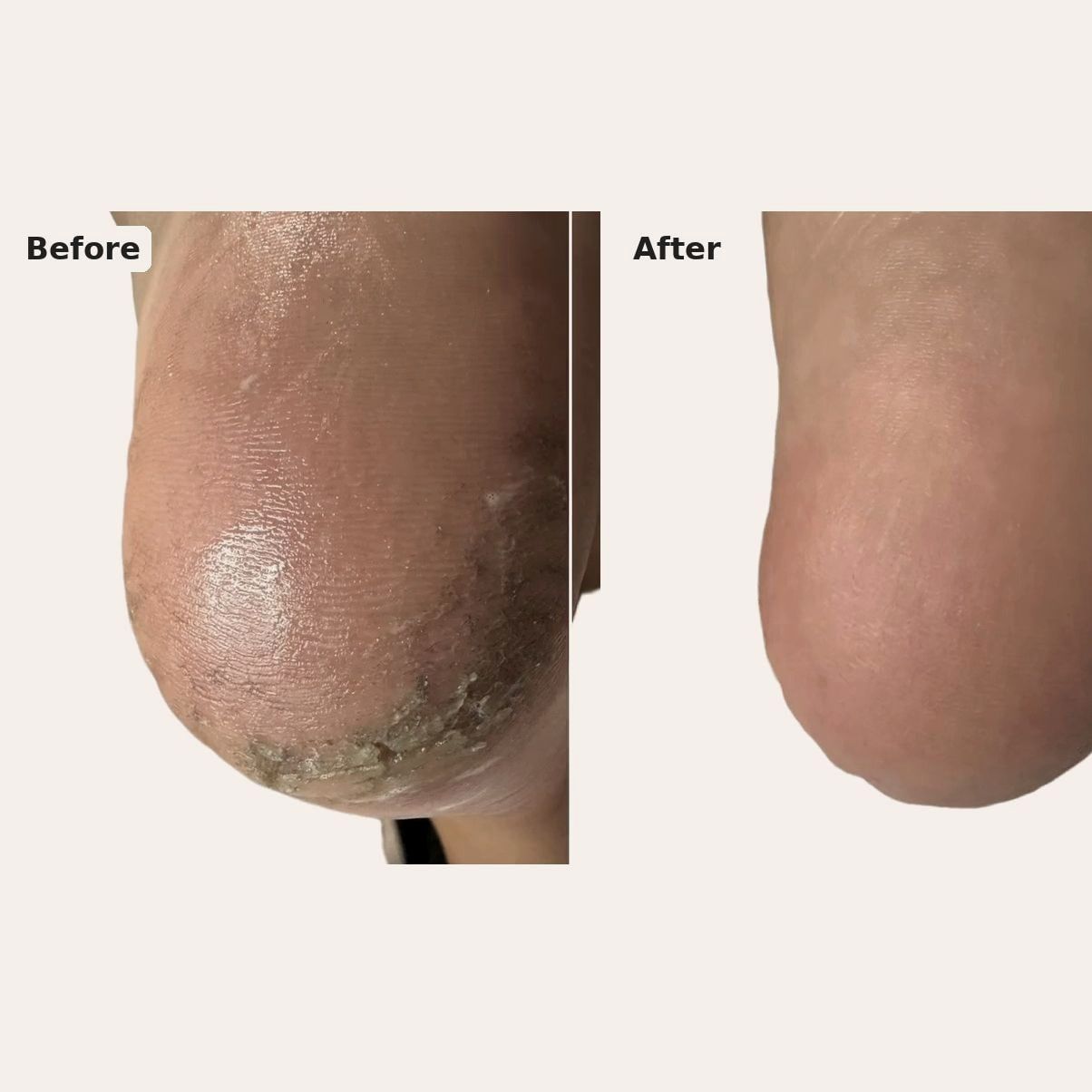
Hard skin is how the skin protects itself from pressure and friction. When it gets too thick, it hurts or cracks. I remove it with a dry technique and a rotary tool, and we look for where the pressure comes from, so it builds up more slowly.
I care for calluses, corns and cracked heels at the studio in Buffalo Grove, in the suburbs of Chicago.
Who it is for
- Hard, yellowish skin on the heels, under the toes or on the side of the foot.
- A corn that hurts under pressure, like a pebble in your shoe.
- Heels that crack and hurt when you walk, especially in winter.
- Seniors and people with diabetes without wounds who find it hard to care for their feet on their own.
Where it comes from
A callus is a wide area of thickened skin where the foot is constantly rubbed or carries body weight. A corn is smaller, but it has a hard core that presses deeper into the skin — that is why it hurts sharply under pressure. Cracks appear when a thick layer of hard skin dries out and loses its flexibility.
Shoes are the most common cause: too tight, high heels, a stiff heel counter or open at the back. The shape of the foot, the way you walk and dry skin add to it. Without changing the cause, hard skin grows back.
Before
After
What the visit looks like
- Assessment. I look at your skin, feet and shoes, and check that it really is a corn — sometimes a different skin change looks the same.
- Care. I remove the hard skin and the core of the corn with a dry technique and a rotary tool, and smooth the edges of cracks.
- Home care. Cream at the end and a plan for home: what to use, how often and when to come back.
What you can do yourself
- Use a urea foot cream every day, ideally at night.
- Use a pumice stone gently, and not every day.
- Do not cut hard skin with a razor, scissors or a grater.
- Wear shoes that do not press, with a closed heel, especially when your heels crack.
When to see a physician first
- a crack bleeds or oozes, or there is redness and warmth around it;
- there is a dark spot or a wound under a callus;
- you have diabetes with wounds, poor circulation or reduced feeling in your feet;
- a spot grows quickly or changes how it looks — another cause than pressure has to be ruled out.
Questions
What should I put on cracked heels at home?
A urea cream, every day, ideally at night under cotton socks. Use a pumice stone gently, on dry skin and not every day. Do not cut hard skin with a razor or a foot grater: it is easy to cut yourself.
Can I use corn plasters?
Not if you have diabetes, poor circulation or reduced feeling in your feet. Acid plasters also soften the normal skin around the corn and can leave a wound. Otherwise, ask at your visit what suits your skin.
Why do calluses come back?
Because the pressure that caused them comes back: shoes, the way you walk, the shape of your foot. Removing hard skin does not change the cause, so it builds up again. That is why we also talk about shoes and home care at the visit.
See also: foot care pedicure · first visit · all services